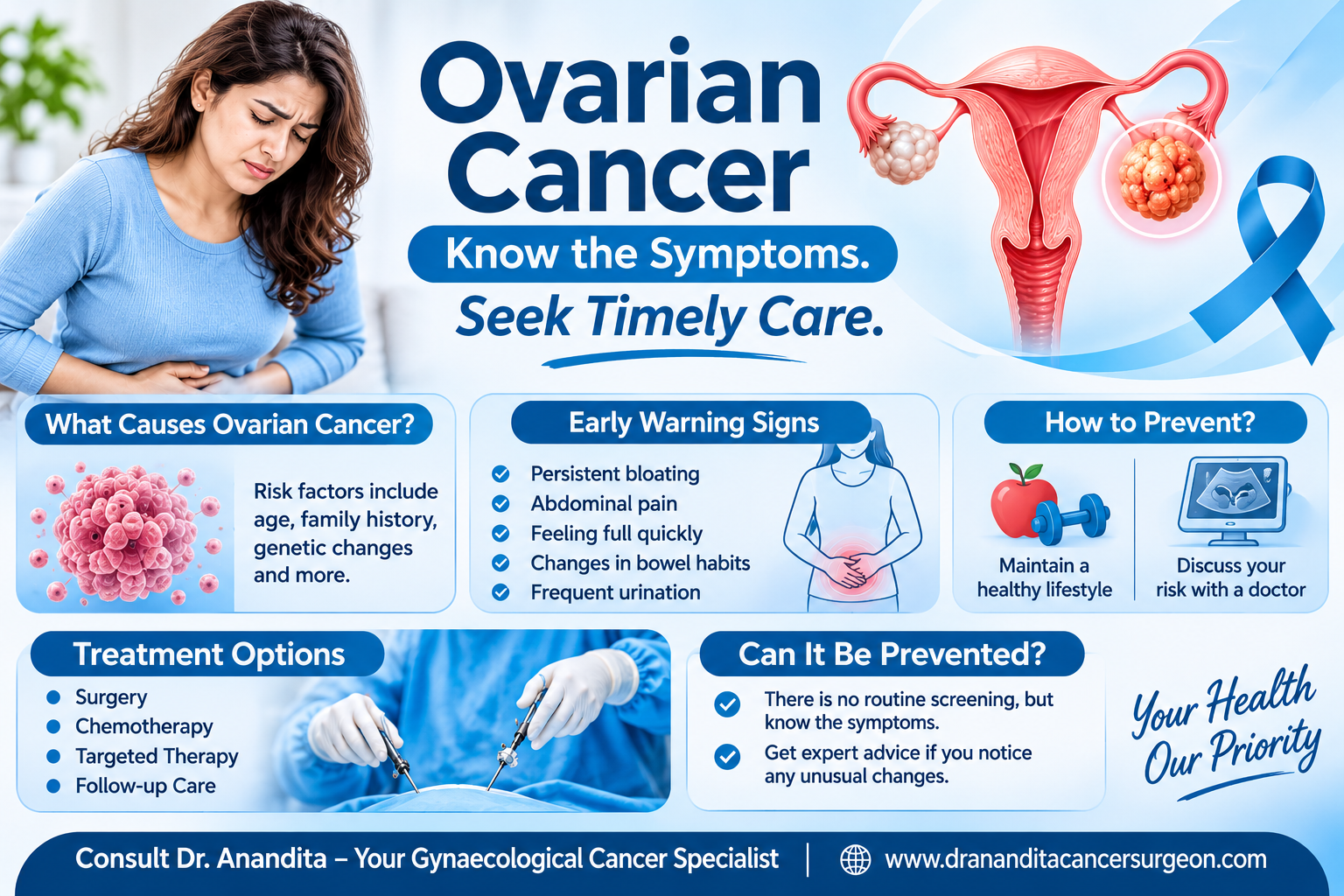
Ovarian cancer develops when abnormal cells grow uncontrollably in or around the ovaries. The ovaries are part of the female reproductive system and are responsible for producing eggs and hormones.
Ovarian cancer can be challenging to detect early because its symptoms may resemble common digestive or menstrual problems. Understanding persistent symptoms and seeking timely medical evaluation are important steps towards diagnosis and treatment.
What Are the Symptoms of Ovarian Cancer?
Symptoms may be subtle, particularly during the early stages. Common warning signs include:
Persistent abdominal bloating
Swelling or an increase in abdominal size
Pelvic or abdominal pain
Feeling full quickly while eating
Difficulty eating normal-sized meals
Frequent or urgent urination
Changes in bowel habits
Unexplained fatigue or weight changes
These symptoms are common in many non-cancerous conditions. However, if they are new, persistent, frequent or unusual for you, consult a healthcare professional.
What Increases the Risk of Ovarian Cancer?
The risk of ovarian cancer may be influenced by several factors:
Increasing age
A family history of ovarian or breast cancer
Inherited genetic changes, including BRCA1 and BRCA2 mutations
Lynch syndrome and certain other inherited conditions
A personal history of certain cancers
Having one or more risk factors does not mean that a woman will develop ovarian cancer. Women with a strong family history may benefit from genetic counselling.
How Is Ovarian Cancer Diagnosed?
If ovarian cancer is suspected, a doctor may recommend a pelvic examination, ultrasound, selected blood tests such as CA-125, and additional imaging.
CA-125 is not a stand-alone diagnostic test. It may be elevated in non-cancerous conditions, and some women with ovarian cancer may have normal levels.
A definitive diagnosis generally requires examination of tissue by a pathologist. The diagnostic process depends on the clinical findings and the suspected disease.
What Are the Treatment Options for Ovarian Cancer?
Treatment depends on the cancer type, stage, genetic findings and the patient’s overall health.
Treatment may include:
Surgery: An operation to remove the tumour and, when appropriate, other affected tissues.
Chemotherapy: Medication used to destroy cancer cells or control their growth.
Targeted therapy: Treatments such as PARP inhibitors may be appropriate for selected patients, depending on genetic and tumour testing.
Genetic testing and counselling: These may help guide treatment decisions and assess inherited cancer risks for the patient and family members.
A gynaecological oncologist can coordinate evaluation and treatment planning.
Can Ovarian Cancer Be Prevented?
There is currently no routine screening test proven to reduce ovarian cancer deaths in average-risk women without symptoms.
Women with a strong family history or known inherited genetic risk should discuss personalised risk assessment with their healthcare professional.
Maintaining routine healthcare appointments and recognising persistent symptoms are important, although neither guarantees prevention or early detection.
Frequently Asked Questions
Is bloating always a sign of ovarian cancer?
No. Bloating is common and usually has a non-cancerous cause. Persistent or unusual bloating, particularly alongside other symptoms, deserves medical evaluation.
Can ovarian cancer occur before menopause?
Yes. Ovarian cancer can affect women before or after menopause, although the likelihood and types vary with age.
Does a normal CA-125 result rule out ovarian cancer?
No. CA-125 alone cannot reliably rule ovarian cancer in or out.
Seek Expert Medical Advice
Persistent abdominal or pelvic symptoms should not be ignored. An appropriate evaluation can help identify the cause and determine whether further testing is needed.
Dr. Anandita provides specialist care in Obstetrics, Gynaecology and Gynaecological Oncology at Mohandai Oswal Hospital, Ludhiana.
Visit https://drananditacancersurgeon.com/ to learn more.
This article is for educational purposes only and does not replace professional medical advice.
 admin