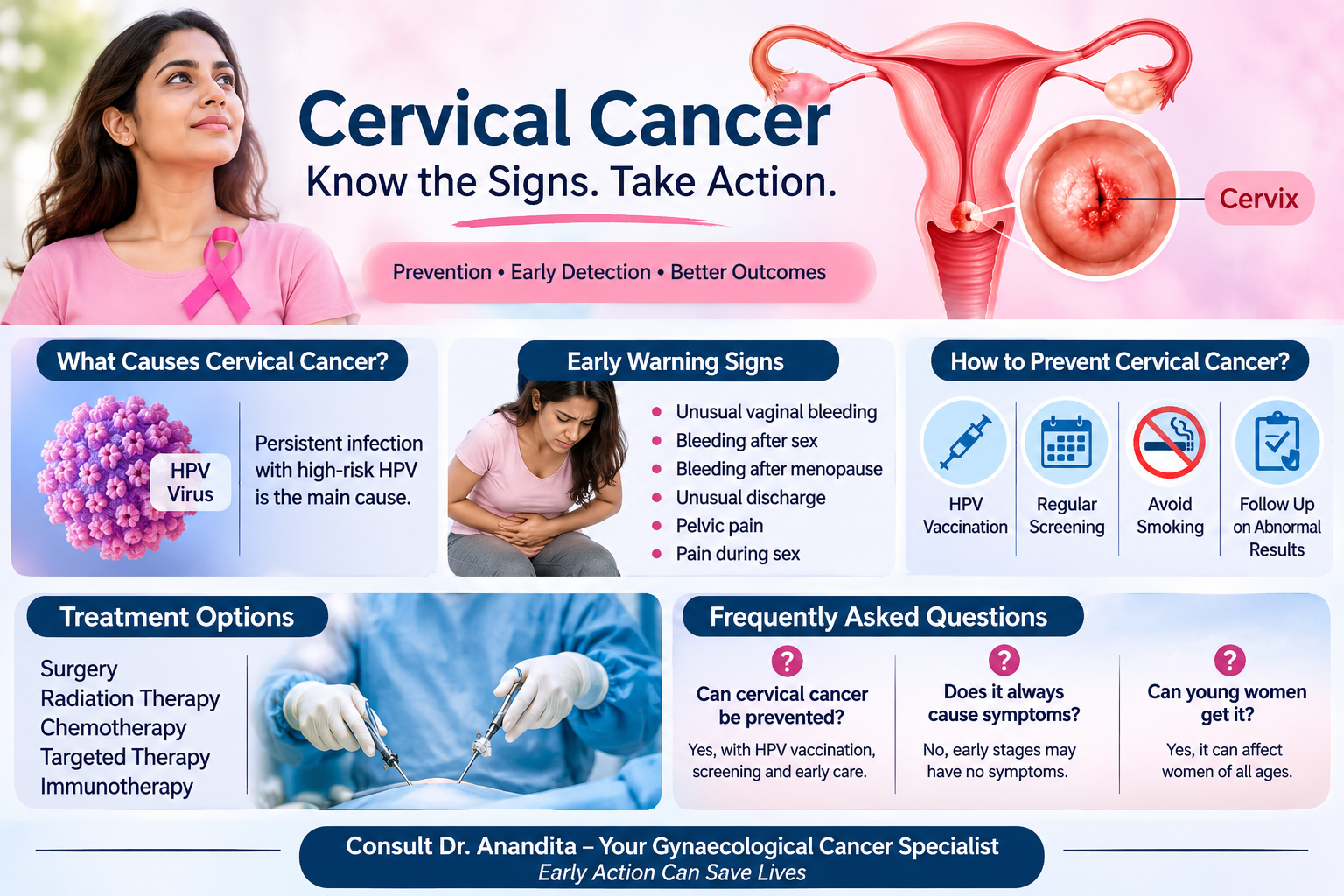
Cervical Cancer: Early Warning Signs, Causes, Prevention and Treatment
Cervical cancer is one of the most common gynaecological cancers affecting women worldwide. It develops in the cervix, the lower part of the uterus that connects to the vagina. The good news is that cervical cancer is often preventable through HPV vaccination and regular screening, and treatment outcomes can be better when the disease is detected early.
Understanding the symptoms, risk factors and available treatment options can help women make informed decisions about their health.
What Causes Cervical Cancer?
Persistent infection with high-risk types of human papillomavirus (HPV) is the primary cause of almost all cervical cancers. HPV is a common virus transmitted mainly through intimate skin-to-skin contact.
Most HPV infections clear naturally. However, when a high-risk infection persists over time, it can cause changes in cervical cells that may eventually develop into cancer.
Other factors, such as smoking, a weakened immune system and inadequate screening, can increase the risk.
Early Warning Signs of Cervical Cancer
Early cervical cancer may not cause noticeable symptoms. As the disease progresses, some women may experience:
Vaginal bleeding between menstrual periods
Bleeding after sexual intercourse
Bleeding after menopause
Unusual vaginal discharge
Persistent pelvic pain
Pain during sexual intercourse
These symptoms do not necessarily indicate cancer, but they should be evaluated by a qualified healthcare professional.
How Can Cervical Cancer Be Prevented?
Several measures can help reduce the risk of cervical cancer:
1. HPV vaccination: HPV vaccination helps protect against the HPV types responsible for most cervical cancers. Ask your healthcare professional about the appropriate vaccination schedule.
2. Regular cervical screening: HPV testing and Pap tests can help identify high-risk infections or abnormal cervical cells before cancer develops.
3. Timely follow-up: Abnormal screening results should be evaluated according to your doctor’s recommendations.
4. Avoid smoking: Smoking is associated with an increased risk of cervical cancer.
What Are the Treatment Options?
Treatment depends on the stage of cancer, the tumour’s characteristics, the patient’s overall health and fertility preferences.
Options may include surgery, radiation therapy, chemotherapy, targeted therapy or immunotherapy in selected cases. Early-stage disease may be treated surgically, while more advanced disease may require a combination of treatments.
A gynaecological oncologist can assess the diagnosis and recommend an appropriate treatment plan.
Frequently Asked Questions
Can cervical cancer be prevented?
Many cases can be prevented through HPV vaccination, appropriate screening and timely management of precancerous cervical changes.
Does cervical cancer always cause symptoms?
No. Early cervical cancer may have no symptoms, which is why recommended screening is important.
Can cervical cancer affect young women?
Yes. Although risk varies with age and other factors, cervical cancer can affect younger women as well as older women.
Consult a Gynaecological Cancer Specialist
Recognising symptoms and following recommended screening guidelines can make an important difference in cervical cancer prevention and early detection.
For evaluation and personalised guidance, consult Dr. Anandita, Consultant in Obstetrics, Gynaecology and Gynaecological Oncology at Mohandai Oswal Hospital, Ludhiana.
Website: https://drananditacancersurgeon.com/
This article is for educational purposes only and does not replace professional medical advice.
 admin