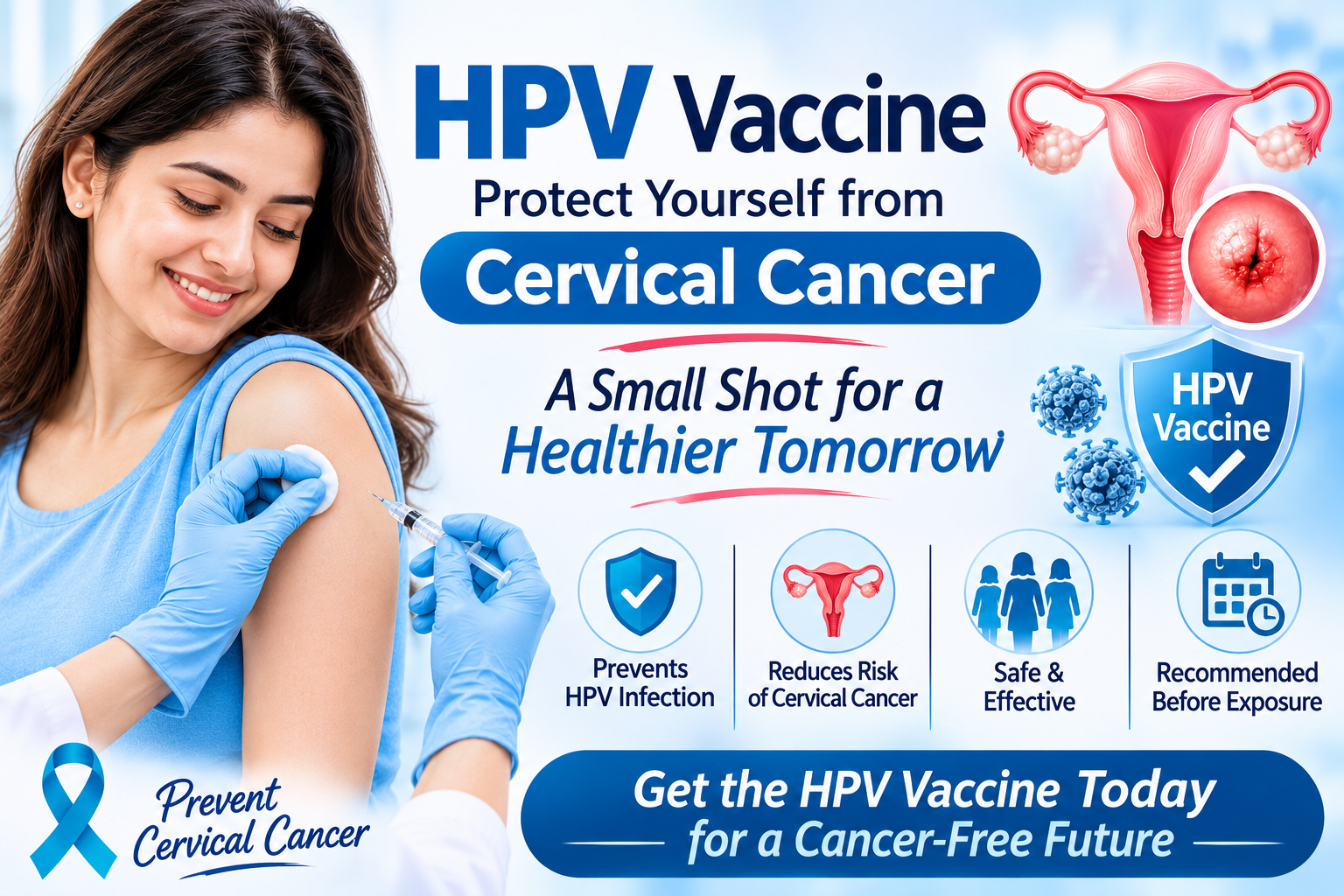
Understanding the connection between HPV and cervical cancer can help women make informed decisions about vaccination, screening and preventive healthcare.
What Is HPV?
HPV is a group of viruses with many different types. Some cause common skin warts, while others affect the genital area.
Most HPV infections clear naturally without causing lasting health problems. However, persistent infection with certain high-risk HPV types can lead to precancerous changes and, over time, cervical cancer.
HPV is transmitted primarily through intimate skin-to-skin contact. Infection can occur even when a person has no visible symptoms.
Does Every HPV Infection Cause Cancer?
No. Most HPV infections do not lead to cancer.
The greatest concern is a persistent infection with a high-risk HPV type. Such infections can cause abnormal changes in cervical cells over several years.
Regular screening helps identify high-risk HPV infections or abnormal cervical cells before cancer develops.
An HPV-positive result does not mean that you have cervical cancer.
What Is the HPV Vaccine?
HPV vaccines help protect against the HPV types responsible for most cervical cancers and, depending on the vaccine, certain other HPV-related diseases.
Vaccination is most effective when given before exposure to HPV. However, eligibility and recommendations vary according to age, previous vaccination and individual circumstances.
Speak with a qualified healthcare professional about the appropriate vaccine and schedule.
HPV vaccination does not treat an existing HPV infection and does not eliminate the need for recommended cervical screening.
What Is Cervical Cancer Screening?
Screening aims to identify high-risk HPV infections or abnormal cervical cells before they progress to cancer.
Depending on local guidelines and individual circumstances, screening may involve:
The appropriate screening method and interval depend on age, medical history, previous test results and local recommendations.
Women with symptoms should seek medical assessment rather than relying on routine screening alone.
Can Cervical Cancer Be Prevented?
Several measures can reduce the risk:
Get vaccinated: Discuss HPV vaccination with your healthcare professional.
Follow screening recommendations: Screening can identify changes before cancer develops.
Complete follow-up investigations: Abnormal results should be assessed as advised.
Seek care for unusual symptoms: Bleeding after intercourse, unexplained vaginal bleeding or persistent pelvic pain should be evaluated.
Frequently Asked Questions
Can married women get HPV?
Yes. HPV can affect anyone who has been exposed to the virus through intimate contact. A positive result does not establish when the infection occurred.
Can the HPV vaccine prevent all cervical cancers?
No. Vaccines protect against important cancer-causing HPV types but do not cover every type.
If I have received the HPV vaccine, do I still need screening?
Yes. Follow the recommended screening schedule even after vaccination.
Take a Proactive Approach to Women’s Health
HPV vaccination and appropriate cervical screening are important tools in reducing cervical cancer risk.
For advice about cervical cancer prevention, abnormal screening results or suspected gynaecological cancer, consult a qualified specialist.
Dr. Anandita, Consultant in Obstetrics, Gynaecology and Gynaecological Oncology,
 admin